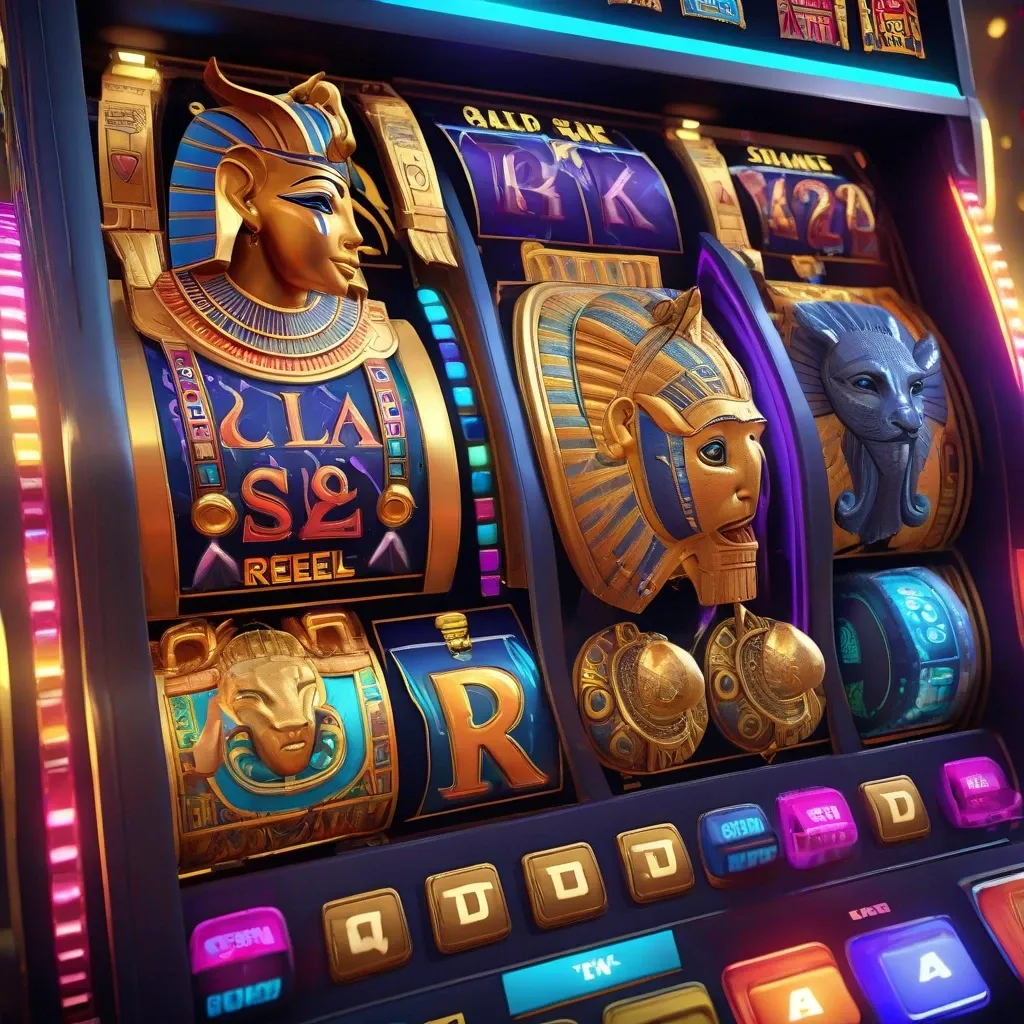
Ever felt that irresistible pull of the spinning reels, that tantalizing promise of a win just around the corner? Slot machines, once humble mechanical contraptions, have morphed into dazzling, high-tech marvels that tap directly into our most primal desires for reward and excitement. It’s a far cry from the one-armed bandits of yesteryear. Today’s slots are meticulously crafted engagement tools, their very design a symphony of psychology woven with cutting-edge technology, all aimed at keeping players hooked. While the thrill of the game is undeniable, it’s crucial to acknowledge the shadow that can flicker behind the flashing lights and cheerful jingles. This deep dive explores the intricate psychology behind slot game addiction, unraveling the ‘why’ behind their captivating allure and shedding light on the delicate balance between exhilarating entertainment and the potential pitfalls that lie hidden within those ever-spinning reels. We’ll be peeling back the layers to understand what makes these games so incredibly magnetic, offering insights into their design and the human mind.
The Core Psychology: Why Slot Games Captivate Our Brains
Ever wonder why those flashing lights and jingling sounds of slot machines are so darn hard to resist? It’s not just random chance; it’s a clever manipulation of our deepest psychological wiring. At its heart, the addictive allure of slot games hinges on a powerful concept called operant conditioning, a fancy term for learning through consequences. Think of it like training a pet; positive reinforcement gets you coming back for more. For slot machines, that reinforcement comes in the form of unpredictable wins. This is where intermittent reinforcement really shines, and it’s arguably the biggest culprit behind slot game addictiveness. Unlike predictable rewards, where you know exactly when you’ll get a treat, slot machines operate on a variable rewards schedule. You pull that lever (or hit that button), and you never quite know if you’ll win big, win a little, or win nothing at all. This uncertainty is a dopamine-releasing powerhouse. Every near-miss or small win triggers a surge of this feel-good neurotransmitter, creating a powerful dopamine release that fuels our desire to keep playing. It’s the very same mechanism that keeps us mindlessly scrolling through social media feeds, chasing that next like or notification. The unpredictable nature of the rewards primes our brains for a constant state of anticipation, making us believe the next spin could be “the one.” This is the número uno factor, the irresistible hook that keeps players hooked.
Variable Rewards: The Unpredictable Thrill
The magic behind slot machines truly lies in their expert application of variable ratio reinforcement. Unlike a fixed ratio reinforcement system, where a reward is given after a set number of responses (like getting a prize every 10 purchases), variable ratio means the reward comes after an unpredictable number of tries. This creates an intense sense of anticipation. Your brain, wired for prediction, is constantly on edge, waiting for that next payoff. Each spin is a gamble, and when that win finally hits, even a small one, it unleashes a powerful dopamine loop. This cycle of anticipation, the brief elation of a win, and the subsequent uncertainty primes our brains to seek more. Repeated exposure to these unpredictable wins strengthens this neural pathway, making the behavior more ingrained and harder to break. The thrill isn’t just in the winning; it’s in the chase, the constant hope that the next pull will be the big one.
The Power of Sensory Feedback: Lights, Sounds, and Animation
Beyond pure psychology, the sheer sensory bombardment of a slot machine is designed to amplify the experience. The moment a game starts, you’re hit with a symphony of sensory feedback. Flashing lights, vibrant colors, and dynamic animations create a visual spectacle that mimics excitement and success. And then there are the slot machine sounds – the distinctive whirring of reels, the celebratory jingles for wins, the suspenseful build-up during a bonus round. These visual cues and auditory signals work in tandem to create a potent feedback loop. Even the smallest win is amplified, making it feel far more significant than it actually is. This constant stream of stimulating input keeps players engaged, effectively blurring the line between the virtual outcome and a genuine feeling of exhilaration. The dazzling displays and energetic sounds are more than just decoration; they’re carefully crafted elements designed to simulate the thrill of victory and keep players immersed in the game.
Deconstructing the Design: Addictive Features Explained
Behind the glitz and the spins, slot games are a masterclass in psychological engineering. It’s not just about luck; it’s about meticulously crafted addictive features that are intentionally designed to keep you glued to the screen. These aren’t happy accidents; they are calculated moves in the intricate dance of slot game design, aiming to maximize player engagement and, by extension, playtime. Think of it as a sophisticated puzzle, where each piece is designed to nudge you further into the experience. We’re talking about mechanics that tap directly into our brains’ reward systems, creating a Loop of anticipation and fleeting satisfaction that’s hard to break. It’s a wild ride, and these features are the rollercoaster’s engine, designed to keep you coming back for just one more spin.
The ‘Near Miss’ Effect: Almost Winning by Design
Ever felt that jolt of excitement when two bonus symbols line up, only for the third to spin away? That, my friends, is the notorious ‘near miss’ effect in action. It’s a cornerstone of slot machine psychology, a clever deception that tricks your brain into believing a win is just around the corner. Landing, say, two out of three crucial symbols isn’t a random occurrence in terms of its impact; it’s a deliberate design choice. This sensation of beingso close* to a big payout significantly boosts player motivation. It manufactures hope, a potent elixir that fuels persistence. Research suggests that experiencing these near misses can dramatically extend playtime, as the feeling of imminent reward overrides the reality of a loss. It’s not just about chance; it’s about strategically presenting false wins that keep the anticipation palpable and the wallet (or virtual balance) open. This isn’t a bug; it’s a feature, ensuring you keep chasing that elusive, almost-there moment.
Losses Disguised as Wins (LDWs): The Sneaky Trick
Prepare yourself for another masterstroke of deception: Losses Disguised as Wins, or LDWs. This is where the lines between winning and losing get wonderfully blurred. Imagine placing a bet of $10 and then winning $5, accompanied by a cascade of celebratory lights and sounds as if you’ve just hit the jackpot. Technically, you’ve lost $5, but the game’s presentation screams victory. This jarring disconnect plays a fascinating trick on our brains. The fanfare and visual cues of a win trigger positive reinforcement, regardless of the actual financial outcome. This creates a feeling of perceived success, making you feel like you’re doing well even when you’re not. The core of gambling psychology is to keep players in the action, and LDWs are a brilliant way to do just that. They provide just enough of a “win” feeling to encourage another spin, making it incredibly hard to recognize the true net outcome of a slot session. It’s a sneaky, yet incredibly effective, way to keep the game going.
Flow State and Time Distortion: Getting Lost in the Game
There’s a magical state of effortless engagement that slot games are adept at inducing, known as the ‘flow state’. Coined and explored by psychologist Mihaly Csikszentmihalyi, this is a state of complete absorption where you’re so engrossed in the activity that nothing else seems to matter. The repetitive, often simple, yet visually stimulating mechanics of slot machines are fertile ground for achieving this state. As you focus on the spinning reels and the anticipation of matching symbols, your attention narrows, and the outside world fades away. This immersion leads to a profound time distortion; suddenly, an hour feels like mere minutes. The game’s continuous loop of action and reaction, punctuated by mini-wins and near misses, creates a persistent sense of progression and minor control, even through micro-decisions. This makes slot sessions feel almost seamless, pulling you deeper and deeper until you realize you’ve spent far more time (and money) than you ever intended. It’s a captivating vortex, expertly designed for sustained immersion.
The Math Behind the Magic: Frequency, Volatility, and Perception
It’s easy to get swept up in the flashing lights and exciting themes of slot machines, but beneath the surface of player psychology lies a complex engine of numbers. While the psychological hooks are undeniably powerful, it’s the underlying slot machine math that truly dictates what happens on the reels. We’re talking about fundamental concepts like RTP (Return to Player), volatility, and win frequency, all working in concert to shape a player’s experience and, crucially, their player perception. Often, players find themselves chasing exciting, but statistically improbable, wins. This chase is heavily influenced by their focus on short-term variance rather than the long-term average that RTP represents. The thrill of a big win, however rare, can easily overshadow the knowledge that, over hundreds of thousands of spins, the machine will return a certain percentage of wagers.
Volatility and RTP: The Chase vs. the Average
Let’s break down the core of slot machine math: volatility and RTP. Volatility, or variance, describes the risk associated with a slot. High volatility slots, for instance, are known for their infrequent but potentially massive payouts. This creates a compelling chase dynamic where players hope for that one life-changing win, often enduring long periods with little to no returns – the dreaded dry spells. Conversely, RTP perception can be skewed by these personal experiences. A player might have a single session where they win big, cementing the belief that the slot is “hot,” despite the statistical reality of its long-term RTP. This creates a disconnect; the player’s short-term variance experience actively masks the predictable, albeit distant, statistical average. The allure of that potential big score, fueled by the thrill of short-term variance, is a potent psychological driver, even when the odds are stacked against prolonged success.
Bonus Frequency and Session Duration: Finding the Sweet Spot
The frequency with which bonus features trigger is a critical piece of the engagament optimization puzzle. A bonus feature that appears too rarely can lead to player frustration and boredom, ultimately cutting a session duration short. On the flip side, if bonuses are constantly hitting, the feature can lose its sparkle and feel trivial – a process of feature devaluation. The math behind bonus frequency aims to find a delicate “sweet spot.” This sweet spot is where bonus rounds are frequent enough to maintain excitement and provide moments of anticipation, but not so constant that they cease to feel special. This balance is directly linked to how long a player wants to stay engaged. Too much downtime between exciting events will make them leave; too little, and the novelty wears off, also leading to them exiting the game. It’s all about carefully calibrated pacing.
Beyond the Reels: The Role of Theme, Narrative, and Visuals
While the spinning reels and potential payouts are the heart of any slot game, what truly elevates a good game into a memorable experience is the artistry that surrounds it. It’s the unique flavor, the captivating story, and the stunning visuals that transform a simple gambling mechanic into an immersive adventure. These elements act as emotional anchors, forging a personal connection that resonates long after the last spin, driving deeper engagement and fostering a loyalty that stretches beyond the thrill of the win. When a theme is strong and the visual style is consistent, players aren’t just playing a game; they’re stepping into a world. This thematic immersion, coupled with a compelling narrative, not only makes a game more enjoyable but crucially, boosts its replayability. It’s the difference between a fleeting distraction and a cherished pastime.
Thematic Immersion: Building Worlds and Stories
Dive into the captivating world of thematic immersion, where slot narratives transport players to far-off lands and epic adventures. Think of the allure of ancient Egyptian mysteries, the grandeur of mythical realms, or the thrill of brave knights venturing into fantasy landscapes. These rich themes provide an escape, allowing players to connect with the game on a profound level. It’s not just about the potential jackpots; it’s about the story unfolding, the characters encountered, and the world built around the gameplay. A consistent art style, from the detailed symbols to the atmospheric backgrounds, paired with a fitting soundtrack, amplifies this sense of presence. This synergy creates an emotional connection that makes players remember the journey, not merely the outcome of each spin.
UI/UX Design Psychology: Reducing Friction, Maximizing Pleasure
The magic of a slot game isn’t just in its theme, but also in how seamlessly players can interact with it. This is where UI/UX design psychology takes center stage, aiming to reduce friction and maximize player pleasure. Think about those satisfyingly large, clear buttons that are easy to hit, the instantly recognizable symbols that don’t require a second glance, and the logical, intuitive layouts that guide players effortlessly. A frictionless experience is paramount; when the interface is confusing or clunky, it breaks the immersion and can be frustrating. By making navigation a breeze, the focus remains squarely on the exhilarating action of the spins. This smooth, intuitive interface keeps players engaged and happily spinning for longer, lost in the game’s flow rather than wrestling with its controls.

The Social and Competitive Edge: Driving Repeat Play
It’s no secret that the world of social casino games has evolved. Gone are the days of solitary spins; the modern player thrives on connection and a healthy dose of rivalry. This surge in social dynamics is fundamentally changing how we interact with our favorite slots, transforming them from simple diversions into vibrant, engaging experiences. Elements like dynamic leaderboards, thrilling slot tournaments, and the general buzz of competitive play are no longer just add-ons – they’re the engines powering player loyalty and repeat visits. This shift taps into something primal: our desire to connect, to compete, and to be recognized. It’s less about just the thrill of the spin and more about the collective journey, the shared victories, and the chance to etch your name in virtual glory.
Leaderboards and Competitions: The Drive for Status
Imagine seeing your name climb the ranks, a constant, tantalizing reminder that you’re among the best. That’s the power of slot leaderboards. They inject a potent dose of urgency and purpose into every spin, transforming casual play into a quest for superiority. Players aren’t just playing for the thrill of a win; they’re playing to improve their standing, to climb, and to hold onto that coveted spot. This taps directly into our innate drive for social status and the recognition that comes with excelling among peers, especially in the fast-paced world of gambling tournaments. When you add prize ladders into the mix, the incentive to keep playing, to keep climbing, becomes almost irresistible, fostering a continuous loop of engagement.
Shared Experiences: From Streamers to Social Wins
The digital age has turned slot gaming into a spectator sport, and it’s wonderfully chaotic. Watching your favorite streamers celebrate massive wins or replaying epic moments creates a powerful sense of shared wins. It cultivates a vibrant community where excitement is contagious. This isn’t just about individual luck anymore; it’s about being part of something bigger, a collective energy that draws players in. This ‘social proof’ – seeing others enjoy spectacular wins – significantly influences individual play patterns. It reframes social gambling not just as a game of chance, but as a truly entertaining social spectacle, making players eager to jump back in and create their own moments of shared elation.
Ethical Considerations and Responsible Play
The magnetic pull of slot machines isn’t accidental; it’s often the result of sophisticated design choices, a psychological labyrinth built to engage and, sometimes, ensnare. It’s crucial to talk about the ethical tightrope walked by game developers and operators. While the thrill of a potential win is undeniable, the underlying mechanics can mimic those found in behaviors that become problematic. Understanding this dynamic is the first step towards a healthier relationship with these games, moving from passive engagement to empowered decision-making. We’re not just talking about entertainment here; we’re talking about player well-being and the responsibility that comes with offering such compelling experiences. It’s about ensuring the fun doesn’t cross the line into something that causes distress or harm. Because at the end of the day, a truly successful game is one that players can enjoy without it negatively impacting their lives. This isn’t about fear-mongering, but about fostering an environment where enjoyment and safety go hand-in-hand. Awareness is your greatest ally, and equipping yourself with knowledge is the most powerful tool in your arsenal.
Recognizing the Signs of Problematic Play
The thrill of the chase can sometimes morph into a relentless pursuit. It’s easy to get caught up in the cycle, but recognizing the warning signals is vital. Are you finding yourself chasing losses, convinced that the next spin will be the big one that erases all the previous ones? Do you find yourself hiding your playing activity from friends or family, or perhaps feeling a sense of guilt or shame after a session? A significant red flag is when gambling starts impacting your finances – resorting to borrowing money, neglecting bills, or dipping into savings meant for other necessities. You might also notice a growing preoccupation with the game, where thoughts about slots intrude on other aspects of your life, and you begin to feel restless or irritable when you’re not playing. It’s not a sign of weakness; it’s a sign that the psychological hooks might be working a littletoo* well. Spotting these signs, whether in yourself or in someone you know, is about acknowledging the powerful reward systems at play and taking proactive steps to regain balance before things escalate further. It’s about having your eyes wide open.
Strategies for Maintaining Control and Playing Responsibly
Taking control isn’t about willpower alone; it’s about implementing smart strategiesbefore* you even start playing. Set ironclad limits on both your time and your money before each session kicks off. Stick to them religiously. Think of these limits not as restrictions, but as protective boundaries. Interventions like taking regular, scheduled breaks away from the screen are surprisingly effective at resetting your perspective. Educate yourself on terms like RTP (Return to Player) and volatility – understanding these can help you make more informed choices about which games to play and what to expect. Crucially, avoid placing bets when you’re feeling stressed, tired, or emotionally vulnerable; your judgment is compromised then. Most platforms offer responsible gaming tools, and utilizing them is a sign of strength, not surrender. Features like self-exclusion for a set period or cool-off periods can be invaluable. These are proactive measures designed to ensure that your engagement remains a source of fun, not a source of distress. Be the captain of your own ship.
Conclusion
It’s quite the intricate dance, isn’t it? The way slot games hook us isn’t just random chance; it’s a carefully orchestrated symphony of psychological triggers and clever design. We’ve touched on how variable rewards, near misses, and the sheer sensory overload all play a role, pulling us deeper into the experience. The mathematics, often hidden beneath the flashing lights and cheerful sounds, is the engine that keeps this cycle turning, ensuring that winning is alwayspossible*, but rarely guaranteed. Understanding this interplay—the psychological levers, the design choices, and the underlying math—is your most powerful tool. It’s about playing with awareness, recognizing the patterns, and keeping a firm hand on the reins. For those who find the pull too strong, or who worry about their engagement tipping into problematic territory, remember there’s always support available. Knowing is the first, and perhaps most crucial, step towards a healthier relationship with these captivating machines.